PIERS ANALYTICS
Trade data research tool that helps businesses grow by combining shipment details, partner relationships, and company demographics into one intuitive platform.
Problem
Customers needed a way to access trade data without juggling multiple tools or piecing together fragmented information. The problem was to design a single product that combined all elements of trade data into one streamlined experience, while still being intuitive for first‑time users. At the same time, the product had to balance technical limitations with design goals, ensuring the interface felt modern, consistent, and scalable for future growth.
Trade data was scattered across multiple tools and sources.
Users needed a streamlined, intuitive experience for shipment details, relationships, and demographics.
First‑time users required a clear, approachable interface.
Technical limitations had to be balanced with design goals.
The design system needed to be modern, consistent, and scalable.
My Role
I led all UX/UI design elements of the product. My responsibilities included shaping the first‑time user experience, designing usage counters, creating unified data selectors, and guiding the overall product strategy.
Challenges
Designing PIERS Analytics meant more than combining data sources. The real challenge was creating a product that felt approachable, scalable, and effective for businesses.
Translating complex trade data into a clear, usable format.
Building a design system that could scale across future product lines.
Aligning backend limitations with design vision.
Ensuring the interface felt modern and consistent.
Balancing usability with technical constraints.
Discovery & Research
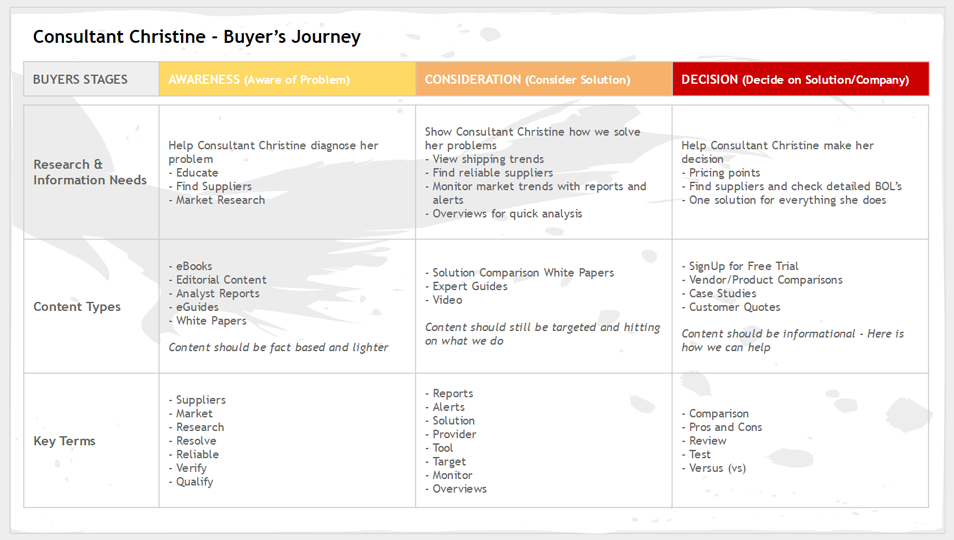
Customer insights and prior work on the e‑commerce website shaped the foundation of PIERS Analytics, with collaboration and feedback guiding the design direction. I built on existing personas and customer journeys from earlier projects, conducted interviews to align findings with backend functionality, and created wireframes to test ideas early and often. Prototypes were shared with customers for feedback, reinforcing collaboration between design and development teams while balancing the design vision with system limitations.


Solution
The project was a significant undertaking, loosely based on an existing product but modernized for usability and scalability. Strong customer partnerships and early testing ensured the design was effective.
Modernized the look and feel while improving functionality.
Designed a streamlined interface for intuitive navigation.
Launched a private beta two months before release.
Collected valuable feedback to refine the product.
Ensured the experience was engaging and effective for end users.


Summary & Reflection
Continuous feedback and agile collaboration drove the success of PIERS Analytics. Even with a short lifecycle, the product delivered measurable impact and valuable lessons.
Tracked customer engagement using Google Analytics and Salesforce.
Identified top searches, categories, and usage patterns.
Refined features based on real customer behavior.
Collaborated closely with developers and product managers.
Implemented design improvements quickly in an agile environment.
Increased sales, product growth, and user activity during its five‑month run.
Proved that complex trade data could be delivered in a way that was intuitive, engaging, and scalable.
Reinforced the importance of collaboration, agility, and listening closely to customers.
This project taught me a great deal about working in an agile environment, collaborating across teams, and listening closely to customers. It also reinforced how even small design decisions can make a big difference in the user experience.